
The New Rules of Networking: Are Portfolio Careers the New Business Norm?
The New Rules of Networking: Are Portfolio Careers the New Business Norm?

66% of Gen Z professionals in the UK now have multiple income streams, signalling a major shift in how career success is being defined. As AI reshapes industries and traditional job security declines, portfolio careers are emerging as one of the fastest-growing models of modern work.
For decades, professional success followed a predictable formula: one degree, one industry, one job title, and often one employer for years at a time. Stability was considered the ultimate career goal. But today, economic uncertainty, AI disruption, and changing workplace expectations are reshaping how professionals define long-term success.
As a result, portfolio careers are emerging as a dominant model in the modern workforce, reflecting a wider macro-shift towards flexibility, personal branding, and relationship-led career growth. In many ways, this shift also reflects the ‘new rules of networking,’ where visibility, adaptability, and human connection increasingly shape long-term professional opportunity.
But what exactly is a portfolio career, and why are so many professionals moving towards this way of working?
What is a Portfolio Career?
A portfolio career is a professional path where an individual builds multiple streams of work, skills, or professional identities instead of relying on one traditional role or employer. This could include consulting, content creation, speaking, freelancing, advisory work, entrepreneurship, investing, coaching, or combining several industries at once.
According to The Open University, a portfolio career (also referred to as a 'squiggly career') is a form of self- or partial employment where individuals hold multiple roles at the same time rather than following a traditional linear career path. It offers a more flexible way of working, shaped around personal skills and lifestyle needs, and has become increasingly common in the post-pandemic workforce.
Portfolio careers are often misunderstood as ‘side hustles,’ but they are increasingly becoming structured and intentional career strategies built around flexibility and long-term adaptability.
In many ways, portfolio careers are becoming a form of modern career insurance, helping professionals build resilience by reducing reliance on one employer, industry, or income source.
As portfolio careers continue to grow, strong professional relationships and consistent visibility are becoming increasingly important in helping opportunities flow across different industries and career paths.
Why Are Portfolio Careers Becoming More Common in 2026?
Portfolio careers are becoming more common because the traditional idea of career stability is rapidly changing. As AI reshapes industries and workplace expectations evolve, more professionals are recognising the importance of transferable skills and building visibility beyond a single job title.
At the same time, younger generations are redefining what professional success looks like. While previous generations often prioritised long-term stability within one company or industry, many Gen Z professionals are placing greater value on flexibility, financial independence, work-life balance, and ownership over their time.
This shift is also being accelerated by digital platforms and personal branding, which have made it easier for professionals to build audiences, monetise expertise, and create opportunities across multiple industries at once.
The rise of portfolio careers also reinforces the ‘new rules of networking,’ where opportunities increasingly flow through reputation and trusted connections.
What Are the New Rules of Networking in a Portfolio Career Economy?
One of the ideas explored in The New Rules of Networking is that visibility must happen before opportunity arrives, especially in portfolio careers where relationships often lead to referrals, collaborations, new opportunities and income streams.
In Chapter 11, Turning Networking into Tangible Career Opportunities, Sonya explores how networking has evolved beyond social interaction and become a long-term career strategy tied to professional growth.
Traditional networking’s main focus point was on reaching out only when opportunities were needed. But this isn’t the case anymore. The professionals who consistently share ideas, communicate their value clearly, and build genuine relationships over time are often the ones who attract opportunities organically.
As AI continues to automate tasks and increase competition across industries, human connection and professional trust are becoming even more valuable forms of career capital.
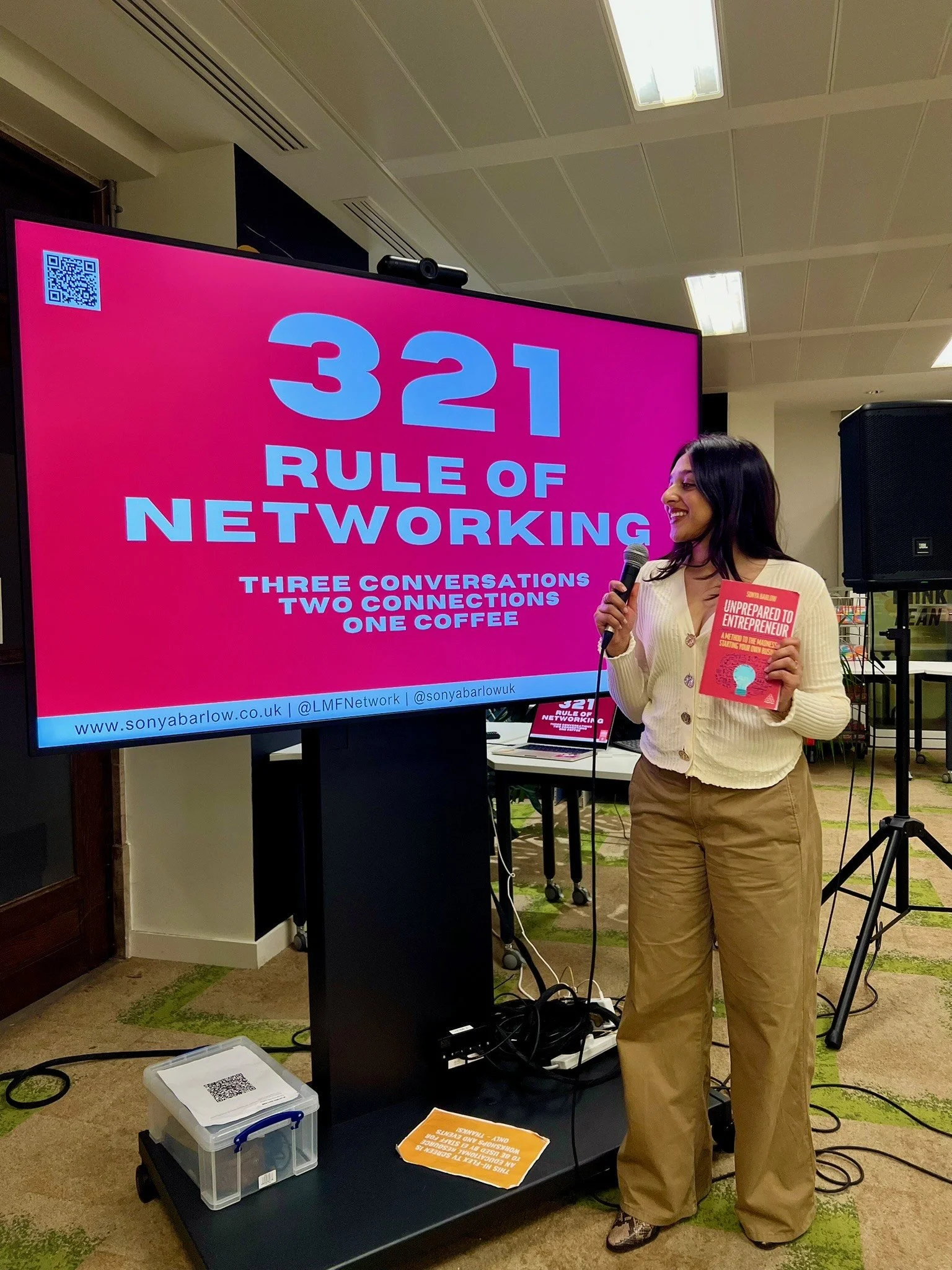
LMF Network x Sonya Barlow
How I Built My Own Portfolio Career
I know this because it’s exactly how I built my own career. I moved from a corporate role into building a global business and personal brand through speaking, presenting, consulting, book writing, content creation, and founding LMF NETWORK (Like Minded Females). Each skill strengthened the others, and each opportunity expanded my network.
As a business networking expert, I’ve seen firsthand how economic uncertainty and AI disruption are accelerating this shift. More professionals are recognising that building multiple skills and income streams creates greater resilience in an unpredictable economy.
While technology and AI have lowered the barriers to entry for building businesses and audiences, human connection relationships remain the strongest drivers of long-term opportunity.
This reflects a simple truth about the future of work: as industries evolve and automation increases, opportunity continues to flow through people. Human connection and consistent visibility have never been more important in shaping career growth.
The Future of Work Will Belong to Adaptable Professionals
The future of work is no longer defined by qualifications or job titles alone. It is increasingly shaped by adaptability, communication, visibility, and the ability to build meaningful professional relationships over time.
The professionals who thrive in this new landscape will not necessarily follow the most traditional career paths. Instead, they will be those who can clearly communicate their value, build credibility consistently, and adapt as industries continue to evolve.
As automation and AI reshape the workplace, human connection and strategic networking are becoming long-term career advantages rather than optional extras.
In this context, your network is no longer just a ‘nice-to-have’. It is a core part of your long-term career strategy.
FAQs
What is a portfolio career?
A portfolio career is a professional path where someone combines multiple income streams, roles, or skill sets instead of relying on one traditional full-time job.
Why are portfolio careers becoming more popular?
Economic uncertainty, AI disruption, and changing workplace expectations are encouraging professionals to diversify their skills, income streams, and professional identities.
What is The New Rules of Networking?
The New Rules of Networking is a book by Sonya Barlow, published by Bloomsbury Publishing, that explores how networking is evolving in the modern world of work. It offers practical frameworks and strategies to help professionals build meaningful relationships and create career opportunities in a changing economy.
How The New Rules of Networking can help you?
It helps professionals rethink networking as a long-term career strategy, where being visible and building a strong reputation can directly influence the opportunities that come your way in a job market that is constantly evolving. It is especially relevant for those building portfolio careers or personal brands.
How can networking help build a portfolio career?
Networking plays a key role in building a portfolio career by opening up referrals, collaborations, and opportunities that often aren’t publicly advertised. It helps professionals increase visibility and access work across multiple industries.
Which chapter of The New Rules of Networking is most relevant to portfolio careers?
Chapter 11, Turning Networking into Tangible Career Opportunities, explores how modern networking strategies help professionals create sustainable career growth and opportunity over time.
📘 The New Rules of Networking by Sonya Barlow with Bloomsbury Publishing is now available to pre-order: https://amzn.eu/d/04RHga8i
🗞This newsletter was written by Sonya Barlow. For business strategy, workshops, keynotes, and campaigns, email work enquiries to: 📩 hello@sonyabarlow.co.uk
Sonya Barlow is an award-winning entrepreneur, keynote speaker, presenter, and author of Unprepared to Entrepreneur, with over 100K followers. She is also the founder of LMF Network (Like Minded Females), a global community helping professionals build confidence, visibility, and career opportunities through networking and mentorship. A leading voice on business networking and the future of work, Sonya delivers keynotes, workshops and training across global tech and corporate sectors and hosts her self-titled show The Sonya Barlow Show on Youtube.