
The New Rules of Networking: Why Are Gen Z Founders Redefining Success?
The New Rules of Networking: Why Are Gen Z Founders Redefining Success?
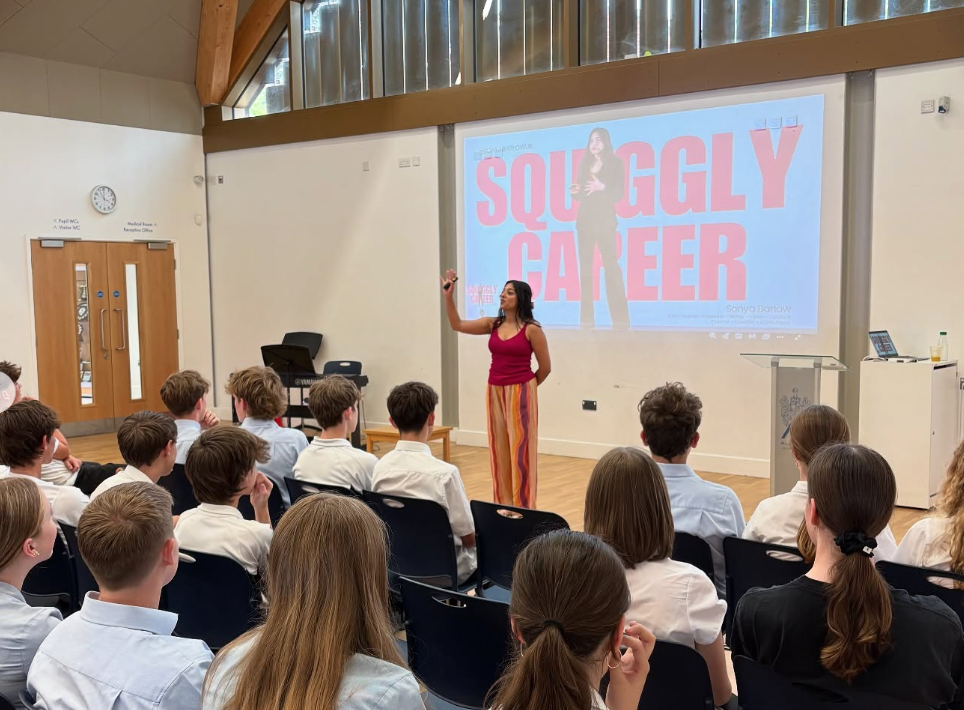
Only 25% of young professionals now want rapid corporate promotions. According to the latest Deloitte Gen Z and Millennial Survey, a massive 75% of Gen Z are deliberately slowing down their career pacing to prioritise stability, well-being, and flexibility over climbing the traditional corporate ladder. This big shift in workplace expectations is being driven by the current state of the job market, economic uncertainty, rapid AI disruption, and a growing desire for flexible work. In this article, we explore how a rising wave of Gen Z founders is completely redefining business success, trading a fixation over corporate job titles for personal branding, financial autonomy, and community-led growth.
This cultural shift has pushed Gen Z entrepreneurship to the absolute forefront of the modern economy. Across industries, more young professionals are proactively building businesses, launching personal brands, creating online communities, and developing careers that prioritise true ownership. Rather than asking, "How high can I climb?" many are asking, "How much impact can I create?" It's a movement that perfectly embodies the ‘new rules of networking,’ where digital visibility, adaptability, personal reputation, and trusted human connection are the new forms shaping long-term career capital.
But why exactly are Gen Z founders approaching business success so differently, and what can the rest of the professional world learn from this shift?
Why Is Gen Z Rejecting Traditional Career Metrics?
The definition of success has always evolved alongside the global economy and with that, every generation is forced to adapt to the unique financial and professional landscape they inherit.
Previous generations often prioritised linear stability because career paths were relatively predictable. A degree led to a stable corporate profession, promotions naturally followed years of experience, and long-term loyalty to a single employer was rewarded. But today’s modern workforce looks entirely different. Many Gen Z professionals entered the job market during periods of economic uncertainty, rapid technological change, and shifting workplace expectations.
As a result, traditional career pathways simply don't offer the security they once did. In a time that feels increasingly unpredictable, younger workers have realised that linear progression is a myth, forcing them to become far more adaptable and entrepreneurial.
Instead of defining professional success through a corporate rank, this generation is actively placing greater value on:
Flexibility - Having autonomy over when, where, and how they work.
Financial Independence - Building multiple income streams to insure against layoffs.
Work-Life Balance - Prioritising mental health and personal well-being over burnout overwork.
Purpose-Driven Work - Creating tangible impact through their everyday efforts.
Business success is no longer measured by status or rigid job titles, but by freedom. This massive cultural shift is fundamentally changing everything from entrepreneurship and career choices to modern personal branding.
Why Are More Young Professionals Becoming Founders?
Technology and changing workplace expectations have completely shattered the traditional barriers to entry for starting a business. According to recent data from LinkedIn News UK, there was a massive 69% rise in UK members adding ‘founder’ to their professional profiles over a two-year period. This rapid growth proves that young professionals are no longer waiting for corporate opportunities to be handed down to them. Instead, they are actively creating their own paths through independent business ownership (newsletters, podcasts, consulting practices, and digital products).
The biggest driver behind this shift is how the younger workforce views career security and personal fulfilment. The same LinkedIn research reveals that 53% of Gen Z professionals choose entrepreneurship because they want to pursue their passions, while 50% are motivated by true financial independence. For this generation, redefining success means moving away from performative corporate titles and using social media platforms to build audiences, showcase unique expertise, and gain full ownership of their professional lives.
Not only that, but AI is also acting as a massive confidence booster for these new business owners. In fact, 79% of Gen Z entrepreneurs state that AI and digital tools played an essential role in helping them launch or run their operations. By utilising technology to automate routine tasks and test business ideas overnight, young creators can focus their energy on high-value strategy and creative problem-solving.
Interestingly, many of these young founders are not abandoning traditional employment entirely to make this leap. Instead, they are combining employment with content creation and freelance projects to build a more resilient professional safety net. Entrepreneurship is no longer viewed as an alternative to a career. It has become a core part of a broader career strategy where the founder mindset is less about starting a massive company and more about taking complete control of your professional future.
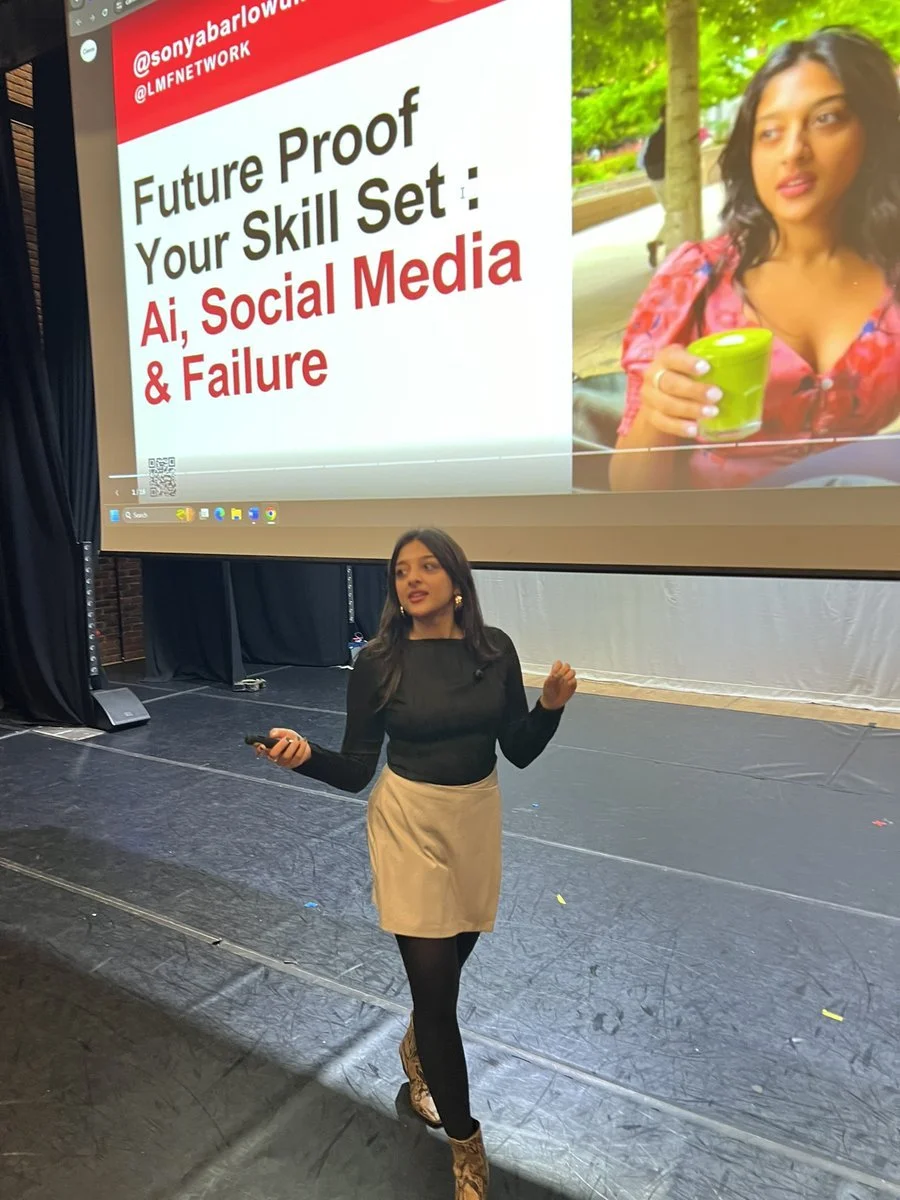
LMF Network x Sonya Barlow workshop at Alleyn’s School
Why Networking and Personal Branding Are the New Career Insurance
For a long time, I was following the traditional corporate path. Moving quickly through London's high-pressure tech and consulting scenes, I treated my career like a strict strategy. I didn't wait around to be noticed; I meticulously managed a ‘brag bank’ of my achievements and initiated quarterly planning sessions to secure promotions. I genuinely believed that climbing someone else's ladder was my only path to long-term career security.
Then, the corporate ladder broke. Despite doing everything right, I was hit with two consecutive redundancies, which at the time felt like my professional world had ended. Looking back from 2026 as an author, entrepreneur, and keynote presenter, those setbacks were not a career ending. They were a necessary structural redirection. Being pushed off that track forced me to stop begging for a seat at someone else's table and start building my own through the LMF Network.
So, to me, Gen Z founders are essentially just recognising this reality much earlier in their journeys. They see that the reward for winning the traditional corporate race is often just more work, institutional politics, and performance exhaustion. Redefining success means walking away from systems that view our basic human need for rest as a red flag. When we embrace a founder mindset, we stop letting a title dictate our happiness and start establishing wellbeing as a core KPI.
One of the biggest misconceptions about entrepreneurship is that long-term success comes from simply having the best standalone idea, when in reality, opportunities arrive through people. Mentors introduce founders to investors, active communities create organic collaborations, and consistent digital visibility attracts strategic partnerships. While traditional qualifications and linear experience will always hold baseline value, they are no longer the exclusive drivers of career advancement.
This is exactly why personal branding has evolved from a basic marketing tool into an essential professional skill. Because modern audiences connect deeply with authentic individuals rather than cold corporate logos, a clear personal brand helps you develop trust at scale, communicate your niche expertise, and protect your professional future against sudden economic shifts. Professionals who proactively invest in their reputation today create visibility that naturally compounds over time.
Success rarely happens in isolation. When you choose to build a community, you create a sustainable ecosystem where trust naturally transforms into tangible business opportunities.
What Employers Can Learn from Gen Z Founders
The rise of the portfolio career means corporate leaders can no longer rely on old-school retention tricks. When employers dismiss the need for healthy boundaries or demand constant overwork, they completely alienate their most innovative young talent.
If you want to keep entrepreneurial minds in your business, things have to change. Leaders need to move away from rigid, time-clocked structures and give people actual ownership over their work. Companies should focus on building real internal communities and supporting personal branding within the workplace. Look at it this way: if a business refuses to offer career paths that respect well-being as a baseline for success, top Gen Z performers will simply build their own projects outside of office hours.
Helping corporate spaces navigate this generational shift is exactly why I am completely rewriting the blueprint for business connections with my upcoming book, The New Rules of Networking, published by Bloomsbury Publishing.
I don't just write about these shifts. I actually help teams manage them every single day. Through the LMF Network, I work directly with global companies and HR teams to deliver interactive workshops and strategic consulting to help businesses navigate changing diversity, equity, and inclusion (DEI) regulations. By teaching organisations how to modernise their networks and support their people, we help employers stop losing top talent and instead unlock the incredible drive of a multi-generational workforce.
What This Means for the Future of Success
The rapid rise of the Gen Z founder reflects a fundamental shift in the global workforce. As the modern market continues to transform, traditional qualifications and linear career progression are no longer the sole metrics of professional security. Long-term stability is now being built through adaptability, digital visibility, and personal reputation. Younger professionals are actively proving that true success lies in creating both a ‘squiggly’ and ‘portfolio’ career that can easily evolve alongside the future of work.
So, how do you thrive in this new environment? While technical skills and experience will always remain important, your professional network acts as the ultimate key for unlocking non-traditional opportunities. The future now belongs to the professionals who proactively showcase their unique values, maintain a strong online presence, and intentionally design their own professional paths, all while adapting to the changing environment.
By building portfolio career capital through visibility and community instead of climbing the corporate ladder, this generation is showing the world exactly why Gen Z founders are redefining success and what the new rules of networking are.
FAQs
Why are more Gen Z professionals becoming entrepreneurs?
Many young professionals are seeking greater flexibility, financial independence, and true ownership over their careers due to an unpredictable job market defined by economic uncertainty and rapid AI disruption. With digital platforms and automation tools dramatically lowering start-up costs, entrepreneurship has become a highly accessible strategy for building a resilient career safety net.
How do Gen Z professionals define success?
Success no longer relies on traditional career progression. This generation defines success through personal flexibility, meaningful impact, individual fulfilment, financial resilience, and the active ability to create their own opportunities rather than waiting for them to be handed down.
What role does networking play in entrepreneurship?
Networking serves as a critical growth engine by helping business owners access referrals, collaborations, partnerships, mentors, investors, and opportunities that are rarely available through cold outreach. Building an authentic digital presence allows founders to scale their visibility and cultivate trusted relationships that secure long-term business opportunities.
What is The New Rules of Networking?
The New Rules of Networking is a modern business book by Sonya Barlow, published globally by Bloomsbury Publishing. It acts as an inclusive, practical toolkit designed to debunk old career myths and help professionals build authentic connections, manage a personal brand, and successfully navigate changing professional landscapes.
Which chapter of The New Rules of Networking is most relevant to Gen Z founders?
Young founders will find massive value in Chapter 16, 30 New Networking Rules: Debunking the Old Myths, as it unpacks how to build portable career capital and successfully navigate a business landscape that values community over traditional corporate credentials.
📘 The New Rules of Networking by Sonya Barlow with Bloomsbury Publishing is now available to pre-order: https://amzn.eu/d/04RHga8i
🗞This newsletter was written by Sonya Barlow. For business strategy, workshops, keynotes, and campaigns, email work enquiries to: 📩 hello@sonyabarlow.co.uk
Sonya Barlow is an award-winning entrepreneur, keynote speaker, presenter, and author of Unprepared to Entrepreneur, with over 100K followers. She is also the founder of LMF Network (Like Minded Females), a global community helping professionals build confidence, visibility, and career opportunities through networking and mentorship. A leading voice on business networking and the future of work, Sonya delivers keynotes, workshops and training across global tech and corporate sectors and hosts her self-titled show The Sonya Barlow Show on Youtube.